
The Solar System - Presentation Reflection & Study Guide Prep
OPENING QUESTION:
Yesterday we briefly discussed the impact of a Mars-sized planet named ________ with the Earth (about 3 billion years ago) that destroyed the other planet and nearly destroyed the Earth.
Have a conversation with your crew and suggest possible benefits to life that are present on Earth now that are a result of that collision.
OBJECTIVE: I will work with my team to reflect on Friday's presentation. What worked well what needs improving.
I will work with my team to begin developing an online study guide for this unit.
CALENDAR:
WORD FOR TODAY:
- solar nebula (star nursery)
- super nova (exploding star)
- Sol ("Our Sun")
- Asteroid ("Rocks in space" otherwise known as "Flying Potatoes" )
- Comet ("A dirty snowball")
- Meteor ("Rocks falling to Earth")
- Moon ("A rocky body orbiting a planet")
- Planet ("A spherical body orbiting a star")
- Mercury (rocky)
- Venus (rocky)
- Earth (rocky)
- Mars (rocky)
- Jupiter *(gas giant and has rings!)
- Saturn *(gas giant has rings!)
- Uranus *(gas giant has rings!)
- Neptune *(gas giant has rings!)
- Dwarf Planet:
- Pluto
- Eris
- Haumea
- Astronomical Unit (1 AU = 150,000,000 km = ~ 100,000,000 miles)
Thea ("Smacked into Earth, nearly destroying our planet")
WORK O' THE DAY:
Let's take a few moments to review last Friday's presentations. I was (and still am!) MOST impressed with the quality of your conversations.
═══════════════════════════
Now please create a google doc and make sure to share with everyone in your group AND ME TOO!
One person in your group please copy the following table into that shared Google Doc (someone in your group should be able to assist)
HINT #1: Go into the File:Page Setup options and change the orientation of your page to landscape
Hint #2: Resize the column widths so all column headings are readable
═══════════════════════════
PLANETS OF THE SOLAR SYSTEM
People designated by the colors Orange and Blue, please work to edit that table so it is full and complete.
People designated by the color Red & Green, please add a page to your shared document and research Dwarf Planets and copy the following table into that same document.
Work to fill in the details there paying particular attention to the defining characteristics


═══════════════════════════
ITEM |
Defining Characteristics |
Diameter |
Location(s) |
Asteroids |
|||
Comets |
|||
Dwarf Planets |
|||
Moons |
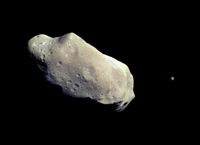
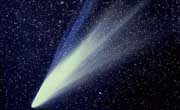
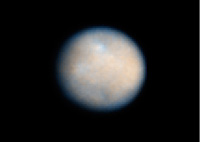
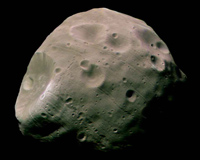
When you are finished, you should have a MOST EXCELLENT study guide for your group for objects in our solar system
Make sure you can:
- Name all the planets in order diameter *and* distance from the sun.
- Describe dwarf planets, moons, asteroids and comets and show how they are different from planets